
Short answer
Water is used to wet Sand and Seed and is one of the early factory’s most important resources. The official page lists surface lakes, underground deposits, melting Ice, rain from Steam, and Lumlings as sources. Water flows downhill, settles in depressions, passes through standard Filters, and can leak through an unblocked corner.
What Water does
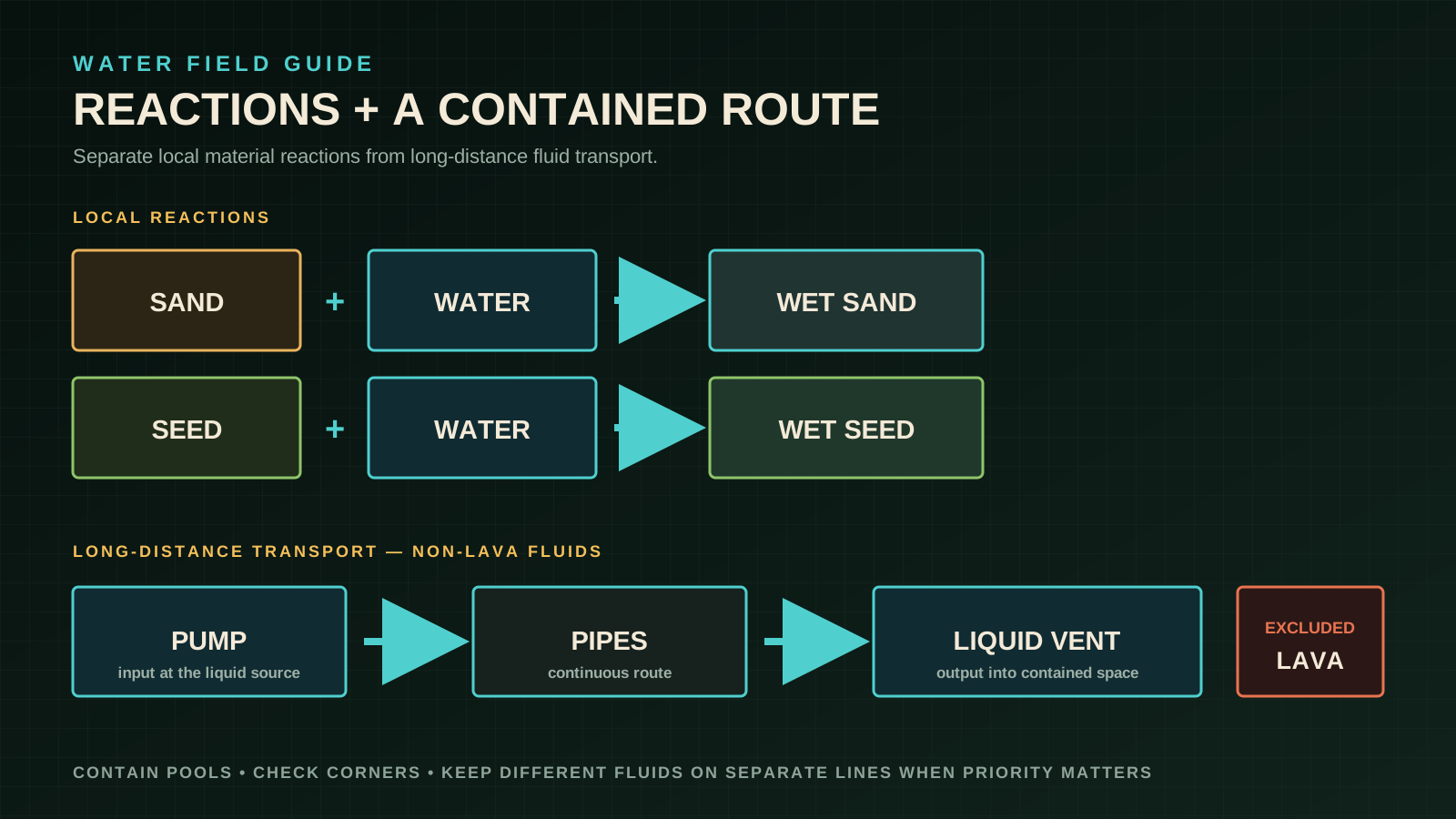
In the official Water page checked on 2026-08-24, one Sand pixel plus one Water pixel are replaced by two Wet Sand pixels. One Seed pixel plus one Water pixel become one Wet Seed. These are local reaction ratios, not factory-wide throughput guarantees, so plan the source, contact area, and next processing step together rather than treating Water as only a transport fluid.
Water also combines with Snow to form Ice and with Fire to form Steam. Snowmakers consume Water. The current sources document those interactions but do not establish one universal factory ratio or production rate.
Reliable sources and early planning
Use an exposed lake or underground deposit when one is available. Ice can melt into Water. Steam that reaches the sky can condense and return as rain, and the official page also lists Lumlings as a source. Which source is practical depends on the current save and unlocked Research.
For a first build, contain a small pool or channel and keep the Sand-to-Wet-Sand contact point visible. If you are testing rain or Steam, use a separate area so the returning water does not hide a leak in the main line.
Moving and containing Water
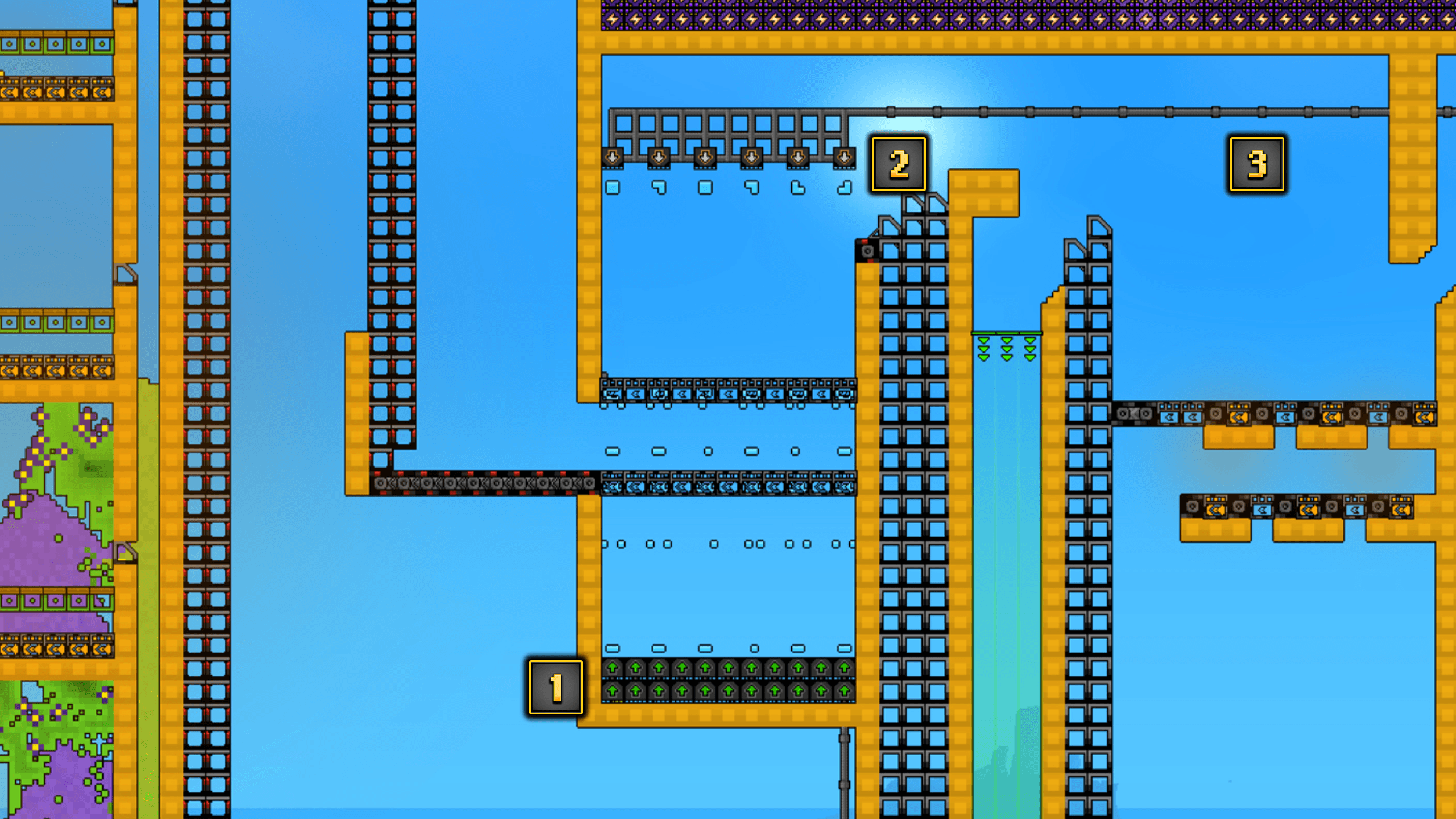
Water flows downhill and settles into depressions. Most buildings that block a non-hovering player also block the flow. Standard Filters allow Water through, while Advanced Filters can be configured to pass or block it. For long-distance fluid transport, the official Beginner’s Guide describes a Pump, Pipes, and Liquid Vent for fluids other than Lava.
Liquids can slip through a corner where two solid blocks meet if no other block closes the gap. When a pool drains, inspect corners and boundaries before replacing the Pump or source. Water that does not find a depression within the documented time can evaporate; do not use that behavior as an unverified production calculation.
Water, Lava, and Steam
Water landing on Lava becomes Steam while the amount of Lava does not decrease. This is a useful physical interaction, but it is not free infinite Water or a complete power recipe. Separate Water and Lava lines when the goal is to preserve liquid input; isolate them when deliberately studying the heat reaction.
Troubleshooting
- Wet Sand is not appearing: verify that Sand and Water actually touch, then check that the receiving area is not blocked.
- Wet Seed is missing: Water is absorbed in the reaction; confirm that the input is Seed rather than another plant material.
- A pool leaks: check block corners, standard Filter behavior, and gaps at the floor before changing the source.
- A pipe line does not flow: check the Pump’s fluid level, the Pipe connection, and the Liquid Vent height. Lava is excluded from this ordinary pipe route.
- Water disappears near heat: inspect for Fire or Lava and decide whether the resulting Steam is intended.
- Do not copy a fixed ratio or “infinite water” layout from an old screenshot without testing the current build.
FAQ
What is the best Water source?
There is no universal answer. The official source lists lakes, underground deposits, Ice, rain from Steam, and Lumlings. Choose the source that exists in the current save and fits the available Research.
Can standard Filters block Water?
The official Water page says standard Filters allow Water to pass. Advanced Filters can be set to block or pass Water.
Can Pipes move Lava?
No. The Beginner’s Guide explicitly excludes Lava from the ordinary Pump/Pipes/Liquid Vent route. See Lava for the solid-state relocation method.
Does Water plus Sand have a fixed ratio?
At the pixel level, the official page checked on 2026-08-24 gives 1 Sand + 1 Water → 2 Wet Sand. That documented reaction does not guarantee a factory-wide rate or sustainable source; observe the current game and size the route around the actual input and output space.
Sources and related links
Sources checked 2026-08-24: official Water page, official Steam page, official Wet Sand page, official Research page, and official Beginner’s Guide.
Continue to Lava, Materials, Shaker Setup, and Beginner Tips.